Larry A. Herzberg, PhD
Larry A. Herzberg
About Me
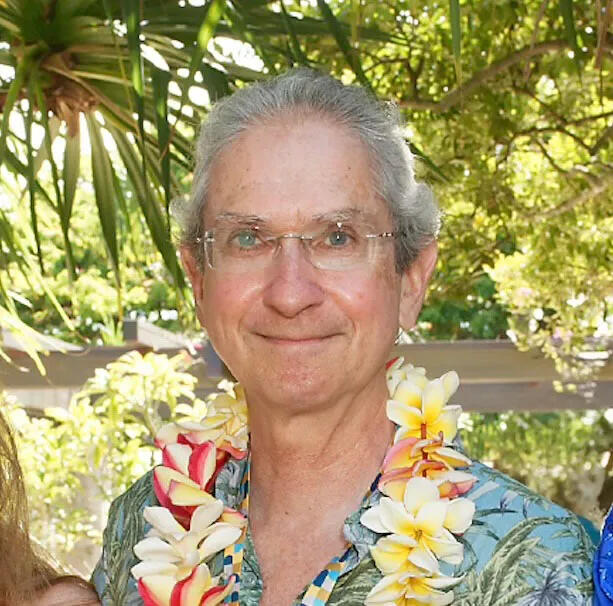
Welcome to my (still fledgling) website! I tend to avoid social media for all the obvious reasons, so this will be where to find me for professional updates going forward. Alas, I am not the only Larry Herzberg on web, nor even the only academic with that name. Hence the use of my middle initial "A" both here and on all my publications.Here are some basic facts about my academic career. I spent my childhood in Gainesville Florida and my teen years in Honolulu Hawaii, where I attended Punahou School—the photo above was taken at my 50th high school reunion there. I received a BA in philosophy from Reed College in 1976 and then spent 14 years in Los Angeles as a touring and studio guitarist (while also dabbling in fiction writing and freelance computer programming). By the late 1980s I felt the need to return to philosophy, and after taking a few refresher courses at California State University Northridge, I spent most of the 1990s at UCLA pursuing a PhD in philosophy, with Tyler Burge as my advisor. My research focused then—as it continues to do—on the philosophy of emotion and the epistemology of self-knowledge: how can we know what we are feeling and towards what (or whom) we are feeling it? While writing my dissertation on these questions I worked as an instructor at UCLA (teaching the philosophy of emotion, symbolic logic, and existentialism) and California State University Long Beach (teaching ethics and critical reasoning). I also worked as a research assistant in the Visiting Scholars Program at the Getty Research Institute. In 2003 I filed my dissertation and was fortunate enough to land a tenure-track position at the University of Wisconsin at Oshkosh. After receiving tenure there in 2009, I continued working at UWO until January 2024, at which time I retired from teaching in order to spend more time on my research. For abstracts and downloads of some of my publications, click on the “Research” button above. For more details about my academic career, click on the “CV” button.Over the last ten or so years, I’ve developed an abiding interest in the philosophy of sex and love, writing about the possibility that sexual attraction is an emotion (rather than merely an instinct or appetite), and on the question of whether one can justifiably doubt that one is in love (even when one is in love). Recently, I completed a two-year book project on sexual passion—specifically, on the states of sexual desire, attraction, and arousal that underlie our central notions of sexual orientation and identity.
Forthcoming Book
The Moral Psychology of Sexual Passion, the 22nd volume in Mark Alfano's The Moral Psychology of the Emotions series, will be published February 2027 by Bloomsbury Academic. This book brings together fourteen diverse philosophers (including myself as editor and contributor) with a variety of provocative views about the nature and value of sexual passion. For more on the book, including its Table of Contents and contributors’ names, just click on the cover-
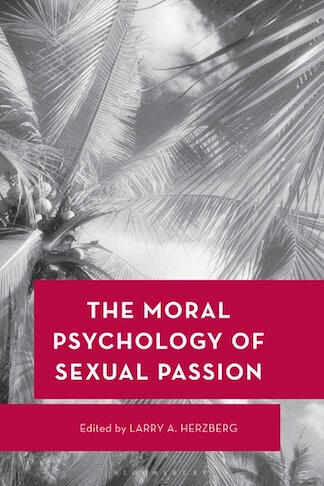
Topics covered include how classifications of sexual passion can reveal the classifier’s values; the conditions under which “giving in” to one’s sexual impulses should take precedence over pursuing one’s longer-term goals; the possibility of there being an “agapic” (value-bestowing) form of lust similar to agapic love; the need to distinguish passionate from dispassionate desires in any adequate analysis of sexual desire; how one’s awareness of sexual anatomy—along with certain contingencies of psychosocial development—may help to explain the personal significance of sexual attraction; how one’s sexual attractions can be rational or irrational in the same ways as one’s emotions; the relative importance of the physiological, phenomenal, psychological, and social dimensions of sexual orientation and identity; how asexuality or being “ace” might be a sexual orientation like being gay; how to best understand the appeal that kink and BDSM can have for some autistic people; the unique difficulties encountered by trans women interested in having sexual or romantic relationships with nontrans men; the complex sexual dynamics found within sexual liberation movements; and finally, how we might have a political right to sexual pleasure even if no individual has a duty to provide us with it.
If you have any questions about The Moral Psychology of Sexual Passion or any of my other writing, please contact me at [email protected].